Why I Think Everyone Should Run at Least One Marathon in Their Life
I didn’t grow up a runner. Not even close.
I’d lifted weights for decades. I was strong, I was big, I was lean — but fit in the cardiovascular sense? Not really. Then in 2021, having just had my son at 36, something shifted. I didn’t want to be the dad who couldn’t keep up. I didn’t want age to sneak up on me while I wasn’t paying attention. So I started running.
And then my DPD driver changed everything.
I was 94kg at the time. Muscular, carrying a lot of mass, not the profile most people picture when they think “marathon runner.” He took one look at me and said: “People your size don’t run marathons.”
I entered Brighton Marathon that same day. Six months out. I’d never run more than a few miles in my life.
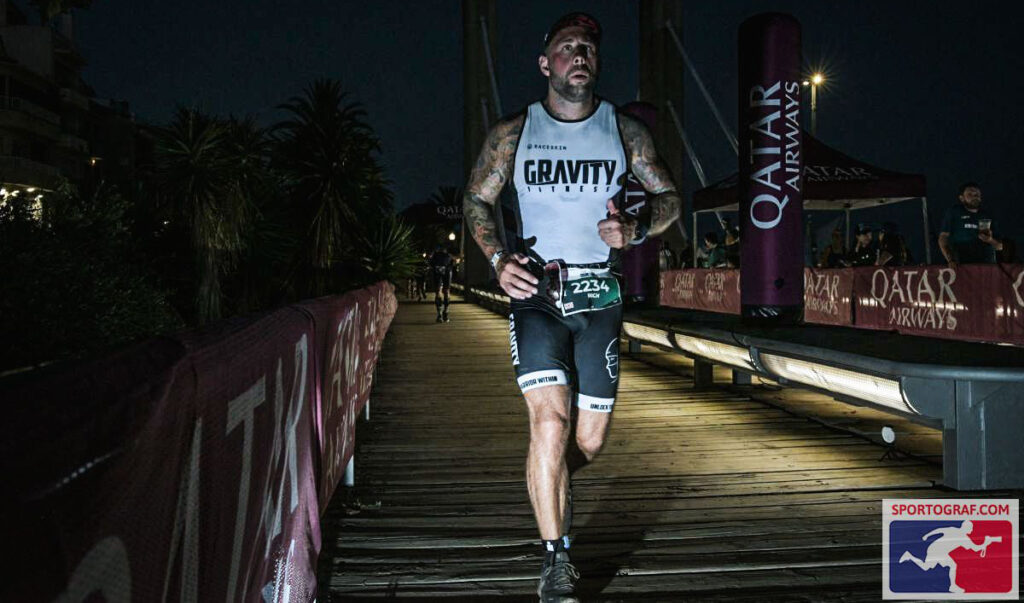
Training went badly, if I’m honest. I did too much too soon, got injured, and never got above 14 miles before race day. But I ran it anyway. And that one decision — sparked by a throwaway comment from a delivery driver — set me off on a path that’s now included two Ironman events, multiple marathons, 5k open water swims, OCR races, Paras10 military rucking events and more. My office wall is covered in medals.
But here’s the thing about those medals. They don’t matter.
What matters is who you become to earn them.
I’m not writing this to tell you to become an endurance athlete. I’m writing it because I genuinely believe running a marathon, just one, will change you in ways that almost nothing else can. Here’s why.
It builds discipline like almost nothing else
When most people think about running a marathon, they can’t comprehend how a human being covers 26.2 miles on foot. I remember the first time I read about an Ironman, 2.4 miles swimming, 112 miles cycling, then a full marathon, and thinking there is absolutely no way a normal person can do that.
Then I realised: thousands of them do. Every single year.
The training is intense. It’s gruelling at times. It’s boring at times, and that’s actually the point. Nobody feels like going out for a long run on a cold Tuesday morning. Nobody wants to log the miles when life is busy and the sofa is comfortable. But you go anyway. Week after week, you go anyway.
That repetition, doing the thing when you don’t feel like it, is discipline. And discipline, in my experience, is the single biggest dial-mover in building the life you want. It doesn’t stay in your trainers either. It bleeds into everything. Your work. Your relationships. Your standards. Training for a marathon will teach you more about discipline than almost any book, course or motivational talk ever could.
It teaches you to compartmentalise
This is one of the most underrated skills in the world, and the marathon teaches it better than almost anything.
Think about the things in life that feel overwhelming. Building a business. A big project at work. A difficult season in your personal life. A long rehabilitation. Most people look at the whole mountain and freeze. The scale of it feels impossible, so they don’t start, or they start and quit when it gets hard.
Marathon training forces you to break everything down. You don’t run 26.2 miles. You run this mile. Then the next one.
I remember being at mile 18 of the marathon in my first Ironman. I’d already swum 2.4 miles and cycled 112. My legs had nothing left. I was ready to stop. So I made a deal with myself: just get to mile 20. At mile 20 I asked: if this was life and death, would I stop? No. Then keep going. Two more miles. Same question. I told myself all kinds of stories. If a bear was chasing me, would I stop? No. Then move.
Breaking the unbearable into the manageable. That skill is worth more in business and life than most people will ever realise.
You’ll go somewhere inside yourself you’ve never been
Somewhere between mile 16 and mile 18 of a marathon, most people want to stop. Your body is telling you it’s done. Everything hurts. The finish line feels abstract and impossibly far away.
And then something happens.
You dig in anyway. You find something. A gear you didn’t know existed. You keep moving when every rational signal is telling you to stop — and you get there. You cross the line.
That experience of discovering what you actually have in the tank when you thought the tank was empty is something most people never get in ordinary life. We stop too early. We quit when things get uncomfortable. We never find out what’s on the other side of our limits because we never push hard enough to reach them.
A marathon pushes you there. And what you find on the other side of that wall is mental resilience that stays with you long after the race is done.
It will change what you believe about yourself
This is the biggest one.
When you cross that finish line, when you complete something you genuinely thought was impossible, something changes in your subconscious. Not metaphorically. Actually changes. Your brain has new evidence. Evidence that when you set out to do something hard, you get it done. No matter how many times you wanted to quit. No matter how much got in the way. You did it anyway.
That kind of self-belief, real self-belief, earned through suffering is rare. And it’s different from confidence that comes from things going well. This is inner confidence. The quiet kind. The kind that doesn’t need to shout.
And here’s the thing about a marathon: it’ll humble you just as fast as it builds you up. You cannot be arrogant out there. The distance has no interest in your ego. You learn to believe in yourself without becoming someone who needs to prove it to everyone else. That balance, inner confidence without arrogance, is one of the most valuable things a person can develop.
You’ll learn to delay gratification
Fitness doesn’t come fast. Building mileage takes months. Getting genuinely marathon-fit requires turning up day after day for small, almost imperceptible improvements. You don’t feel fitter after one run. You feel it after sixty.
Training for a marathon is a masterclass in delayed gratification, in investing now for a return you can’t yet see. And that lesson, once learned, applies everywhere. Business is the same. Relationships are the same. Anything worth building is the same. The people who understand this, really understand it, not just intellectually but in their bones, have an enormous advantage over everyone who wants results before they’ve done the work.
You’ll see the best in people
I wasn’t prepared for this one.
Complete strangers lining the streets, screaming at the top of their lungs for someone they’ve never met. Calling out your name from your race bib, willing you forward. Runners who are suffering themselves stopping to help carry someone else over the line. Literally carry them.
And afterwards, walking through the streets with your medal, the looks you get. The nods. The quiet respect from people who know what that thing around your neck cost you. It’s an experience unlike anything I can adequately describe.
There is something about shared human struggle that strips away everything superficial and reminds you what people are actually like when it matters. The marathon gives you that.
So should you run one?
Yes. I think you should.
Not because running is the point. Not because the medal matters. Not even because of the fitness, though that’s real and significant.
Because of the discipline it builds in you. The compartmentalisation. The resilience. The self-belief. The ability to delay gratification and trust the process. The reminder that you are capable of far more than you currently think.
I was 94kg with no running history and a DPD driver telling me it wasn’t for people like me.
Pick your race. Enter it today. The rest will follow.