Carry Heavy Things. Live Longer. The Surprisingly Simple Hack to Building a Body That Lasts.
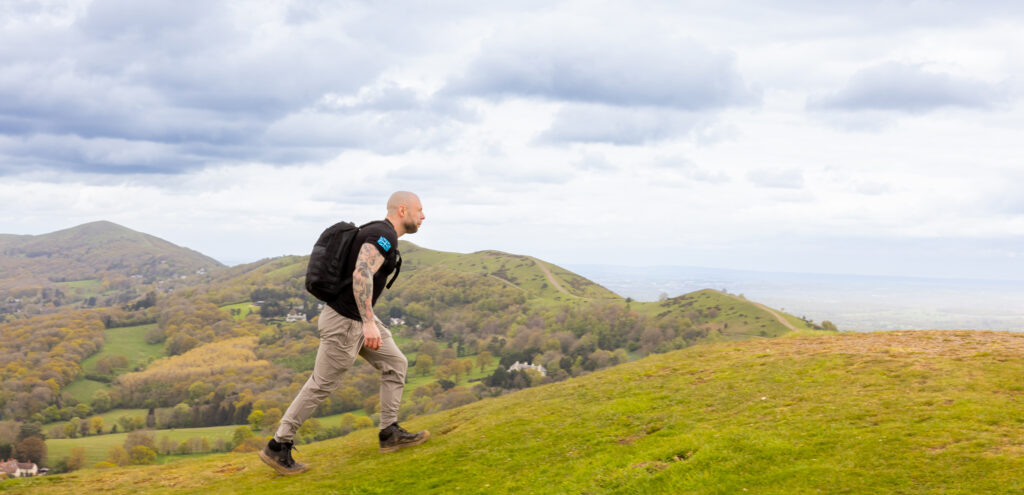
This week, I went to Wales with some of my business team.
Not for a conference. Not for a team building afternoon with a trust fall and a buffet. We went to do the Fan Dance.
If you don’t know what that is, it’s the endurance march used during SAS selection. 24 kilometres across the Brecon Beacons, carrying weight, with nearly 4,000 feet of ascent. And these aren’t gentle hills. They’re brutal, steep, unforgiving mountain sections. We each carried around 20kg in our rucking backpacks. Its not for the fainthearted.
And as I was moving across that mountain, legs burning, pack digging in, I kept thinking about why this felt so right. Not so much enjoyable, not all of it anyway, but right. Like the body was doing something it was built to do.
That feeling took me back to a chapter of my training that changed how I think about fitness completely.
The Year I Trained With the People Who Prepare Special Forces Candidates
A few years ago I wanted to push myself in a completely different direction. I found Building the Elite, a pair of very accomplished coaches who specifically train individuals preparing for special forces selection. I spent the best part of a year working with them.
The goal was simple: learn. Put myself through what they put their athletes through. See what came out the other side.
I came out fitter and stronger than I’d ever been. But more than that, I came out with a completely different understanding of what real physical capability looks like.
Their training was built on two foundations: calisthenics and weighted carries.
Calisthenics I’d been doing since I was 14. That part wasn’t new. But weighted carries, rucking, farmers walks, sandbag work, I’d barely touched. I’d spent years in gyms, lifting weights, getting strong in the traditional sense. But this was different. And it was the missing piece.
So I did what I always do when something catches my attention. I went deep on the research.
Why Nobody Does Weighted Carries (And Why That’s a Mistake)
Walk into any commercial gym and look around. You’ll see people on machines. You’ll see them doing curls, pressing, pulling. You might see someone on a treadmill or a rowing machine. What you almost certainly won’t see is someone picking up something heavy and walking with it.
Why? A few reasons.
Weighted carries don’t look impressive. There’s no dramatic movement. No bench press lockout. No heavy deadlift grind. You’re just… walking. To the untrained eye it doesn’t look like much is happening.
They’re also uncomfortable in a way that’s harder to escape than most gym exercises. On a machine, if it gets too hard, you put the weight down. With a carry, you’re committed. The weight has to get back to where it started. That psychological component puts people off before they even try.
And gym culture has drifted almost entirely towards isolation and aesthetics. What does your chest look like? How big are your arms? Nobody is asking how far you can carry something heavy. But they probably should be.
Because what the research is now showing us is that loaded carries, in almost every form, are among the most powerful things you can do for your long-term health. Not just your fitness. Your actual lifespan.
The Science Behind Carrying Heavy Things
Grip Strength Is a Biomarker for How Long You’ll Live
This is the one that stops people in their tracks when they hear it, and it’s the reason I wanted to write this.
Grip strength has become one of medicine’s most reliable predictors of longevity. A meta-analysis of 42 studies found that people with low grip strength had a 67% higher risk of early death from all causes compared to those with high grip strength. Another study found that each 5kg decrease in grip strength was associated with a 16% higher risk of all-cause mortality and a 21% increased risk of cardiovascular mortality.
A separate 2019 meta-analysis published in Clinical Interventions in Aging concluded that grip strength can predict disability, cognitive decline, and mortality risk. Doctors now use it as a simple screening tool for overall physical decline.
Think about what that means. The strength in your hands, something most people never train deliberately, tells us more about how you’re ageing than almost any other single metric. And farmers walks and loaded carries are one of the most direct ways to build it.
Bone Density
Most people start losing bone density around age 30. It accelerates with age, particularly in women, and it’s one of the primary reasons older people become fragile and fall-prone.
Weighted carries directly combat this. Research from the US Army Research Institute of Environmental Medicine found elevated levels of biochemical markers of bone growth immediately after subjects exercised with weighted vests. The mechanical loading of carrying weight forces the skeleton to adapt and strengthen, the same principle as resistance training, applied through real movement.
Metabolic Health and Fat Loss
Rucking and loaded carries are metabolically brutal in the best possible way. Research shows that adding load to walking significantly increases metabolic cost at every step. A 175lb person walking for 30 minutes burns around 125 calories. Add a rucksack and that number jumps to around 325 calories on the same walk. Same time. Same pace. Dramatically more output.
Beyond calorie burn, carrying weight has been shown to decrease visceral fat, improve insulin sensitivity, and reduce the markers associated with metabolic disease.
Cardiovascular and VO2 Max
VO2 max, your body’s capacity to use oxygen, is one of the strongest predictors of all-cause mortality we have. Carrying heavy loads taxes the heart and lungs in a way that walking alone doesn’t. Research published in the Journal of Strength and Conditioning Research found that load carriage significantly elevates both heart rate and oxygen consumption, pushing you into higher aerobic zones and building real cardiovascular capacity.
Crucially, this happens at a much lower injury risk than running. Rucking causes significantly fewer injuries than running, even in people who regularly do both.
Full Body Strength You Can Actually Use
Here’s what a single farmers walk works: your grip and forearms, your traps and upper back, your core in both isometric and anti-lateral flexion patterns, your glutes, hamstrings, quads, and calves. It coordinates all of these simultaneously under real load.
This is different from the gym. On a machine or even a barbell, you’re often isolating. On a carry, everything works together — and that’s exactly how your body is required to work in real life. Moving furniture. Carrying a child. Hauling something heavy up a flight of stairs. The carry trains the pattern, not just the muscle.
The Seven Carries Everyone Should Know
- Rucking
What it is: Walking with a weighted backpack. Simple. Brutal. Effective.
Start with 10-15% of your bodyweight in a rucksack and walk. Build up to 20-30% over time. You can do it anywhere — streets, trails, hills. If you want to replicate the Fan Dance experience, find a hill.
Why it matters: Rucking is the gateway carry. It’s low impact enough to do multiple times per week, it builds the posterior chain, it improves cardiovascular fitness, and it burns a significant number of calories. It also has deep roots in human movement — we carried things over distance for hundreds of thousands of years. The body understands it.
Best for: Building aerobic base, burning calories, bone density, general conditioning.
- Farmers Walk
What it is: Picking up a heavy weight in each hand — dumbbells, kettlebells, or dedicated farmers handles — and walking.
This is the purest expression of loaded carries. Start with a weight you can carry for 40-50 metres with good posture. Work up from there. The weight should be heavy enough that the last 20 metres are a genuine test of your grip and your will.
Why it matters: This is where grip strength gets built directly. It also forces true postural control — your core has to work hard to prevent the weights pulling your spine sideways. It builds the traps, the upper back, and the entire chain from floor to shoulder in a way almost nothing else does.
Best for: Grip strength, core stability, trap and upper back development, longevity markers.
- Sandbag Shoulder Carry
What it is: A sandbag loaded across one shoulder, carried for distance.
The sandbag is deliberately awkward. Unlike a barbell or dumbbell, it shifts and moves. You have to constantly adjust, brace, and stabilise. That instability is the point.
Why it matters: The one-sided load forces massive anti-rotational core work. Your obliques, QL, and deep spinal stabilisers have to work continuously to keep you upright. This builds the kind of core strength that protects your lower back in real life far more than any plank will. It also develops shoulder and upper back resilience.
Best for: Core strength and stability, unilateral loading, real-world carry patterns.
- Kettlebell Suitcase Carry
What it is: A single kettlebell or dumbbell held in one hand at your side, carried for distance. Looks like carrying a suitcase.
Keep the load heavy enough to be challenging. Walk tall. Don’t lean. Alternate sides.
Why it matters: This is one of the most underrated core exercises in existence. Holding a heavy load on one side while maintaining a perfectly upright position creates enormous demand on the lateral stabilisers. It also directly trains the movement pattern of carrying anything in daily life — shopping bags, luggage, a child. The crossover to real world capability is immediate.
Best for: Lateral core strength, hip stability, grip, functional movement.
- Kettlebell Rack Carry
What it is: One or two kettlebells held in the rack position — fists at chest height, elbows tucked, weight resting on the forearms — carried for distance.
The rack position is demanding to maintain. Your upper back, core, and shoulders are all working hard just to keep the bells stable while you move.
Why it matters: This carry builds upper body endurance in the positions that matter for pressing movements, develops thoracic spine strength, and taxes the core differently from any other carry variation. It’s also a useful diagnostic — if your rack position is weak or unstable, it exposes exactly where your mobility and strength are lacking.
Best for: Upper body endurance, thoracic strength, pressing strength carryover.
- Sandbag Hug Carry
What it is: Holding a sandbag tight to your chest with both arms, like you’re hugging it, and walking.
The sandbag is deliberately awkward and shifts in your arms. Use a weight that genuinely challenges you to hold on.
Why it matters: This carry uniquely loads the anterior chain — your biceps, chest, and front delts — while simultaneously demanding huge core bracing. It’s also the carry that most closely mimics the real-life experience of moving something heavy and bulky. It builds grip endurance, mental toughness, and the kind of total-body tension that carries over to almost everything else you do.
Best for: Anterior strength, core bracing, grip endurance, awkward load training.
- Kettlebell Overhead Carry
What it is: One or two kettlebells pressed overhead and locked out, held there while you walk for distance. Arms straight, biceps by your ears, eyes forward.
The weight needs to be heavy enough to be genuinely challenging to stabilise, but not so heavy your form breaks down. Start with one arm, alternate sides, then progress to double overhead when you’re ready.
Why it matters: This is the most demanding carry variation for shoulder health and stability. Holding load overhead while moving forces the rotator cuff, the serratus anterior, and the entire shoulder girdle to work continuously in the position where most people are weakest. It also demands serious thoracic extension — you cannot do this carry with a rounded upper back, which makes it both a builder and a diagnostic. If your overhead position is poor, this will expose it immediately.
The core demand is also unique. Overhead load shifts your centre of gravity upward, which dramatically increases the anti-rotation and anti-extension work your trunk has to do compared to any other carry variation. It’s the hardest carry to make look easy — and that’s exactly why it’s worth doing.
Best for: Shoulder stability and health, rotator cuff strength, thoracic mobility, overhead pressing strength, core anti-extension.
A word of caution: Get your overhead position assessed before loading this one heavily. If you have existing shoulder issues or limited thoracic mobility, start light and build the pattern before adding weight. Done well, this carry builds bulletproof shoulders. Done poorly, it’s the one carry on this list with genuine injury risk.
How to Start (Even If You’ve Never Done This Before)
You don’t need to be training for SAS selection to make these worth doing. A couple of sets of carries per week will have a measurable impact on your grip strength, your posture, your core stability, and over time, the longevity markers we talked about earlier.
Start simple. Pick one carry. Add it to the end of two or three training sessions per week. Walk for 40-50 metres, rest, repeat two or three times. That’s it. Build from there.
If you want to start with just one, start with rucking. Get a rucksack, load it with 10-15% of your bodyweight, and go for a walk. You’re already doing something the research suggests is one of the most efficient things you can do for your long-term health.
If you’re in a gym, add farmers walks. Pick up the heaviest dumbbells you can carry with good form and walk. It’s not complicated. The simplicity is the point.
The Bottom Line
The gym has made fitness abstract. We’ve reduced physical capability to a set of numbers on machines, how much can you press, how much can you curl, what does your body look like.
Weighted carries ask a different question: can you actually do something useful with that strength? Can you pick it up, hold it, and move with it?
That’s what staying capable actually means. Not looking strong. Being strong, in the ways that matter, for as long as possible.
The research is clear. Grip strength predicts how long you live. Bone density determines whether you age with independence or fragility. Cardiovascular capacity built through low-impact loaded movement protects your heart without destroying your joints.
Weighted carries hit all of it. In one movement. With no machine required.
Pick something up and carry it. Your future self will thank you.