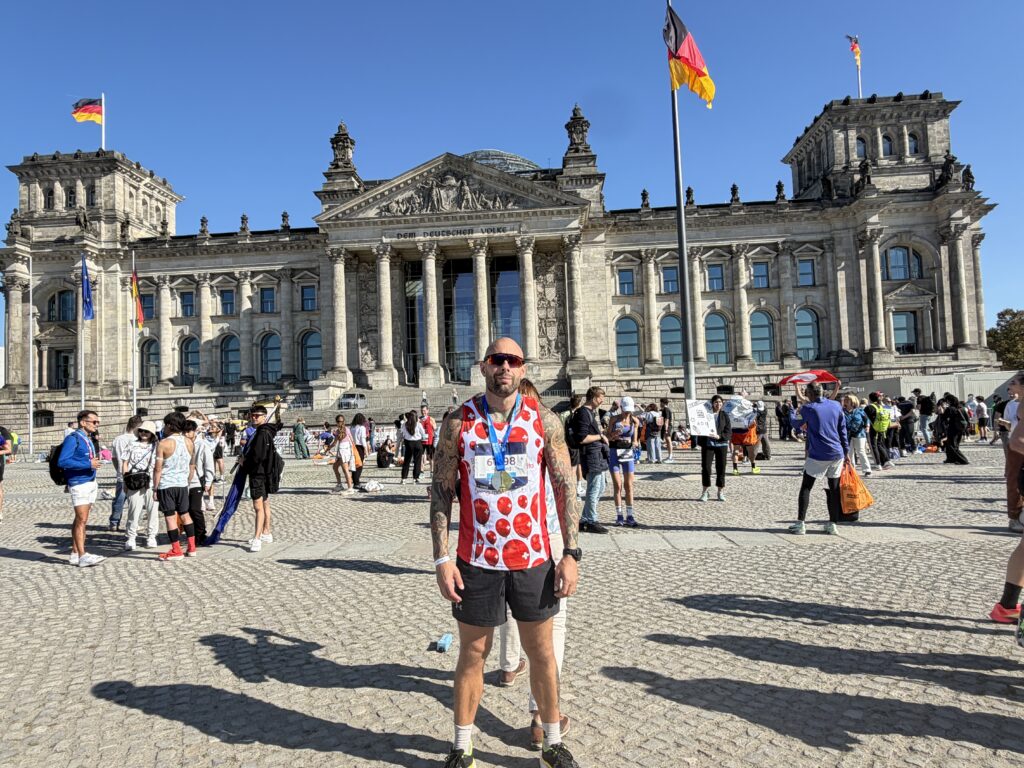
Berlin Marathon: I Gave Advice I Didn't Take
Training for Berlin went about as well as it could have gone. Then, like clockwork, I got ill the week before. I still felt rough on the Saturday, properly doubting whether I’d even make the start line in decent shape.
Sunday morning, I woke up feeling brilliant. Looking back, that was adrenaline talking, not recovery, but at the time it felt completely real. I got myself to the start line with 56,000 other runners, buzzing, absolutely certain, I’ve got this.
So I went out at personal best pace.
The first 15 miles felt genuinely great. Then I hit the wall, hard, and the last 11 miles were hell on earth. Each one harder than the last, doubled over with stomach pains, unable to take a gel or even water without my body cramping in response. Every single person reading this who’s trained with me, or read anything I’ve written about pacing, will already know exactly what I did wrong, because I’d have told them myself, in those exact words, if they’d described their race plan to me the week before.
The advice I’d have given anyone else
If someone had messaged me the week of Berlin and said, I’ve been ill, I felt rough right up to Saturday, but I woke up buzzing on race morning so I’m going out at PB pace, I know exactly what I’d have said. Don’t. Adrenaline isn’t fitness. However you feel standing on that start line tells you almost nothing about what your body’s actually recovered from in the last seven days. Go out conservative, bank the first half, and if you’ve genuinely got it in the tank, you’ll find out in the second half, not the first.
I know this. I’ve coached it, written about it, said it to other people more times than I can count. And on the one morning it mattered most for me personally, I didn’t take a single word of my own advice.
Why we can’t see it in ourselves
Here’s the uncomfortable truth in all of this. Knowing the right advice and being able to apply it to yourself, in the moment, under real pressure, are two completely different skills. I can spot someone else’s pacing mistake from a mile away. I couldn’t spot my own while I was standing in the middle of it, surrounded by 56,000 people, adrenaline running high, feeling genuinely fantastic.
That’s not an excuse, it’s just how it works. Ego, adrenaline and the moment itself are powerful enough to override knowledge you’d apply instantly to anyone else’s situation. You don’t lose the knowledge. You lose access to it, right when you need it most.
What you can do with this: the next time you’re about to make a big decision under pressure or excitement, running, work, anything, ask yourself one question first. What would I tell a friend if they described this exact situation to me. If the honest answer is different to what you’re about to do, that’s the signal worth listening to, not how you happen to feel in that moment.
The irony of how it actually ended up
Here’s the part that stings most. I crossed the line slower than I wanted, slower than training had indicated I was capable of. And the frustrating truth is, if I’d gone out slower in the first place, the chances are I’d have finished faster overall. The last 11 miles cost me far more time falling apart than a more conservative first half would ever have cost me in pace. I didn’t just make the race harder on myself, I almost certainly made it slower too.
What you can do with this: going out conservative isn’t the cautious option, it’s usually the faster one. The time you think you’re protecting by going out hard early is rarely as much as the time you lose when it falls apart later. Pace like you want to still be moving well in the last quarter of whatever you’re doing, not just the first.
Staying capable means admitting when you weren’t
I talk a lot about staying capable. Berlin is a reminder that capability doesn’t mean getting it right every time, it means being honest about it when you don’t, and actually learning from it rather than quietly moving on. I gave the right advice to plenty of people this year. On the one day it mattered most for me, I didn’t take it.
That’s the whole lesson, really. Knowing the right thing to do isn’t the hard part. Doing it when it’s you, in the moment, feeling invincible, is.