Weighted Calisthenics Over 40: Why I Went Back to Basics
Calisthenics has been a staple of my training since the very beginning, when I was 16.
I’ve told this story before, but it’s worth telling again. My dad wouldn’t let me lift weights. So instead, he made me a pull up bar out of an old scaffold pole. He wrapped an inner tube around it, wedged it between two doorways in our flat, and set me one challenge. Ten sets of ten pull ups.
That’s where it all started for me, and it’s stayed with me for life. It’s the reason I started Gravity Fitness all those years ago. I believed then, like I do now, that calisthenics is the foundation of all fitness.
I have to be honest, I love lifting heavy
Here’s the confession, though. I love the feeling of pushing big weight.
I’ve never been a huge reps guy. Fifty push ups in a row has never really lit me up. What I love is the challenge of moving something heavy, and the strength that comes with it. That feeling when a lift that crushed you a few weeks ago suddenly moves.
For a long time those two loves sat slightly apart in my training. Calisthenics on one side, heavy lifting on the other.
Since the marathon, everything has changed
I’ve done weighted pull ups and dips in my training before, on and off. But since the marathon, they’ve become the focus.
Every workout now starts with them. Weighted pull ups, weighted dips, and the other fundamentals. I write every lift down, and every week I try to beat it. Sometimes that’s one more rep. Sometimes it’s a little more weight. Sometimes it’s just the same numbers with better form. But it’s always a step forward, and I can see it on paper.
I have to admit, I’m loving it. It’s taken me right back to that scaffold pole in our flat, just with a bit more weight hanging off me.
Weighted calisthenics is the best of both worlds
Here’s why I think weighted calisthenics should be part of everyone’s training, especially once you’re over 40.
You keep moving the way you were built to move. A pull up, a dip, a push up, a lunge. These are natural movements that train your body as one connected system, not a collection of muscles isolated on a machine. Adding weight doesn’t change that. You still have to control your whole body through space, you’ve just made it harder.
You get the strength benefits of heavy lifting. Bodyweight alone eventually stops being enough of a challenge. Once you can do 20 pull ups, doing 21 builds endurance more than strength. Add weight, and suddenly you’re back in the range where muscle and strength are built. That’s exactly the message you want to keep sending your body as you age. I still need this muscle. Don’t take it away.
It’s kinder on the body than just chasing a heavy barbell. You’re not loading your spine with a huge bar on your back. The weight hangs from you or sits on you, and your body moves through its natural path. For most people over 40, that’s a far more sustainable way to train heavy for the long term.
Progress is simple and measurable. Write it down, add a rep or a bit of weight, repeat. There’s no complicated programme needed. That simple feedback loop is what keeps me coming back every week.
The strength is strength you can actually use. Pulling yourself up onto a ledge. Pushing yourself up off the floor. Carrying a 20kg child on your shoulders for two hours. Weighted calisthenics builds exactly the kind of strength that turns up in real life.
Master the basics first
There’s an important catch. Adding weight is not a shortcut. If you’re not yet at the point where you can do these movements well with your own bodyweight, that’s where you start.
Weight amplifies everything. Good form gets stronger. Bad form gets you injured. So earn the right to add weight first.
As a rough guide, I’d want someone to manage around 8 to 10 clean, strict pull ups, around 15 solid dips, and 20 or more good push ups before they start adding load. If you’re not there yet, that’s not a problem. It’s the plan. Build your reps, own the full range of motion, and the weight will still be waiting for you.
The main movements
These are the fundamentals I build my sessions around.
Weighted pull ups and chin ups. The king of upper body pulling. They build your back, arms, grip and core all at once. Use a dip belt with a plate or kettlebell hanging from it, or a weighted vest. Full hang at the bottom, chin over the bar at the top, no kipping.
Weighted dips. The pushing partner to the pull up, and one of the best chest, shoulder and tricep builders there is. Go to a depth your shoulders are comfortable with and control the way down. If, like me, you’ve ever had tight shoulders, respect this one and build up slowly.
Weighted push ups. Wear a vest, or have someone place a plate on your upper back. Keep your body in one straight line, chest to the floor, full lockout at the top. It’s a far better test of strength than people give it credit for.
Weighted squats and lunges. Don’t forget the legs. Hold a kettlebell at your chest, wear a vest, or carry dumbbells by your sides. Walking lunges and split squats in particular build the single leg strength and balance that matter more and more as we age.
Hanging leg raises. Not always loaded, but always part of it. A strong core ties every other movement together, and it’s one of the best protections you have against a bad back.
How to add the weight
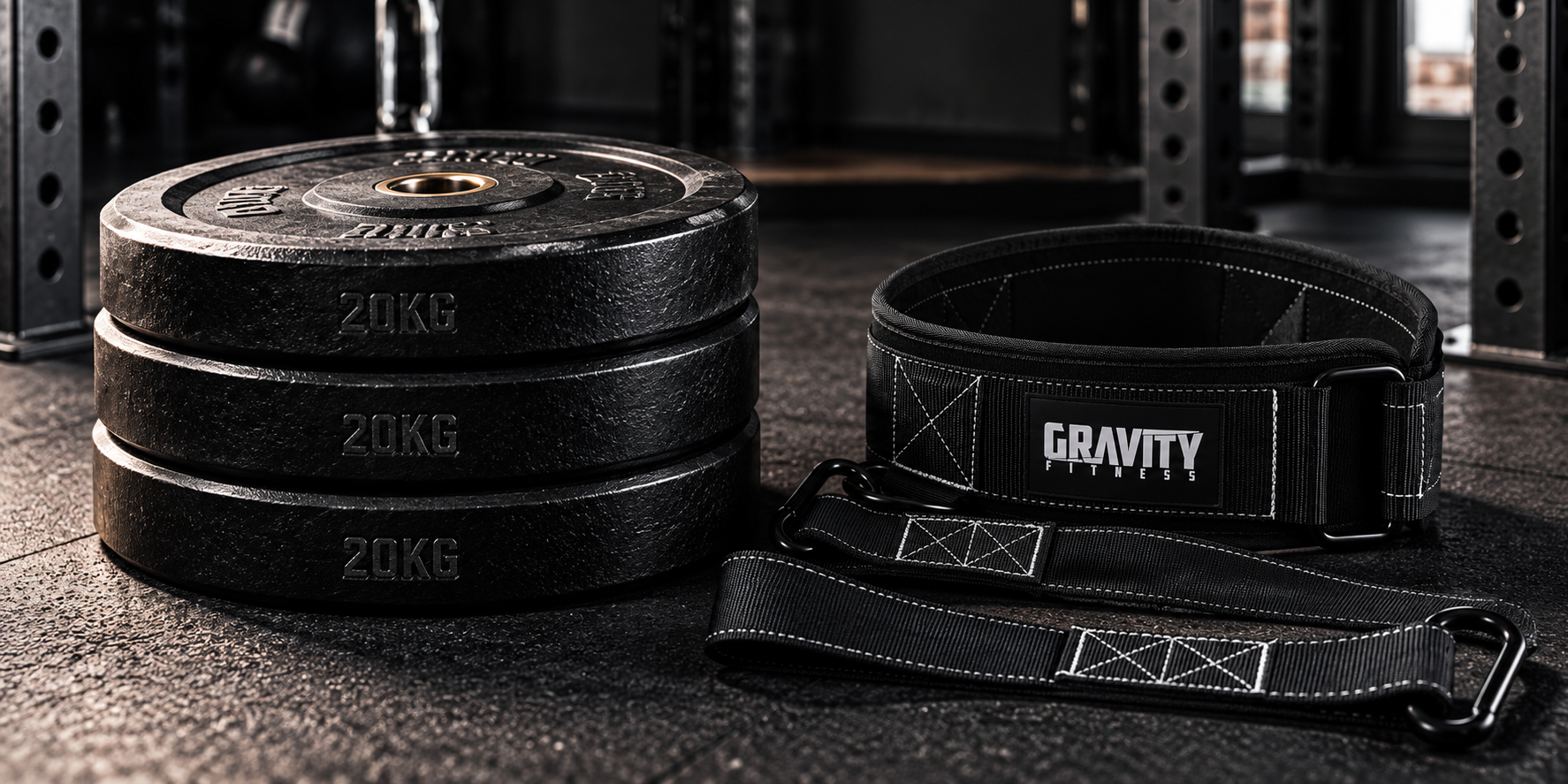
You don’t need much kit. A dip belt is the best investment for pull ups and dips. A weighted vest works across almost everything. And if you have neither, a backpack filled with books or water bottles will do the job to get you started. That’s very much in the spirit of a scaffold pole wrapped in an inner tube.
Start light. Add weight in small jumps. Keep your reps in a sensible range, somewhere around 5 to 8 rather than chasing one rep maxes, especially if you’re over 40 and want to keep training for decades.
And write it all down. Every rep, every kilo. That logbook will become one of your best motivators.
Back to basics, but heavier
It’s funny where training takes you. After all these years, all the marathons, all the skills, I’ve ended up back where I started, on a pull up bar, trying to get a bit stronger than I was last week.
Calisthenics is the foundation. Weight is how you keep building on it. Master the basics, then load them up, and keep telling your body it still needs to be strong.